
Software Reselling for Accounting Firms: How to Turn It Into a Revenue Stream
What you will learn
- Which vendor programmes are worth joining, ranked best to worst
- How to group your clients by the software they run
- The margin you actually keep after fees, leakage and admin, at 20% to 50% discounts
- How to split the saving with clients and disclose it
- How to run the billing so it scales, without WIP or ad-hoc invoices
Frequently asked questions
Who is this guide for?
Accounting and bookkeeping firms that pay for software on behalf of their clients, such as Xero, Dext, QuickBooks, MYOB, ApprovalMax or a payroll tool, and want to be paid properly for it.
What will I learn from this guide?
Five steps: find out which vendors pay you, group your clients by the software they run, work out the margin you actually keep, split it so the client saves and you still earn, and run the billing so it scales. It uses worked examples you can swap your own numbers into.
What is software reselling for an accounting firm?
If you pay for software on a client's behalf and bill it on, you are already reselling. The guide covers three ways it earns: advice, vendor economics such as partner discounts and commissions, and recharge margin, which is the gap between what the vendor charges you and what you bill the client.
How much can a firm earn from software reselling?
As an example, a 30% discount on a $130 a month subscription is $468 a year gross and about $359 net, after processing fees, leakage and admin. Across 100 clients with a built billing process, that is about $35,900 a year. These are illustrative figures, so replace the assumptions with your own.
Which vendor programmes are worth joining?
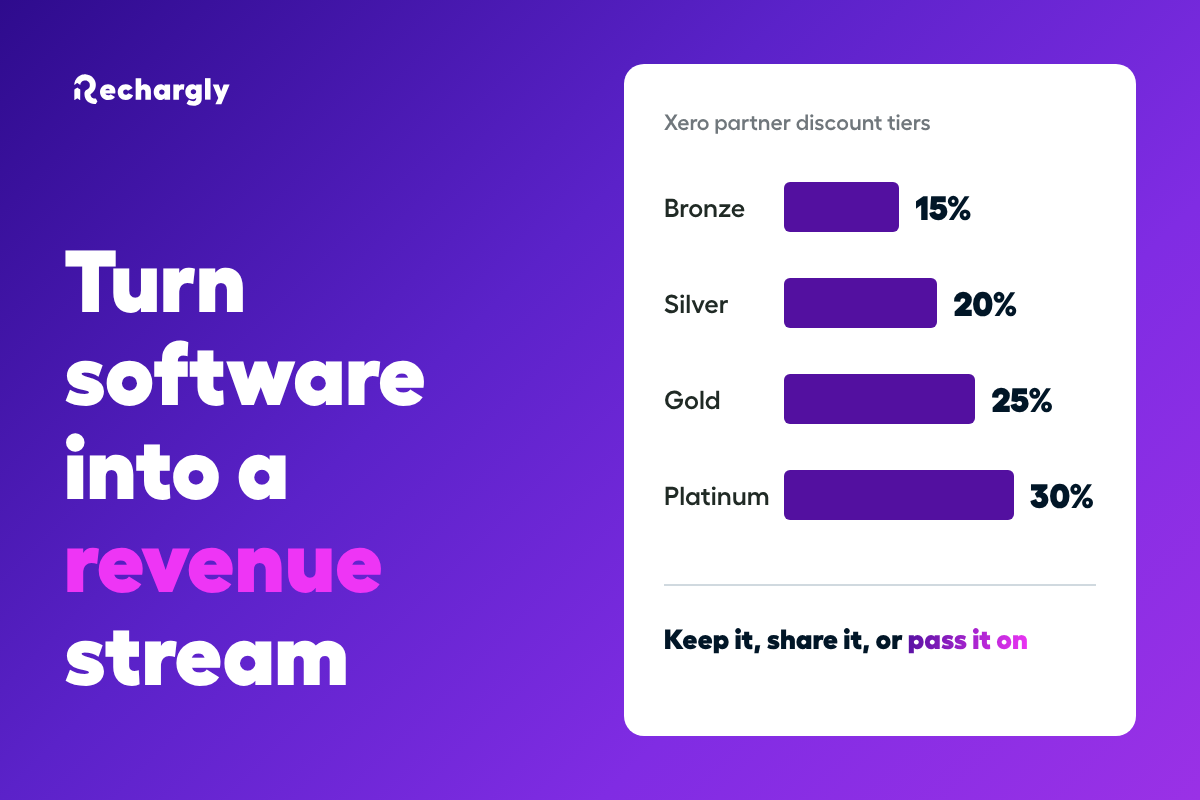
The guide ranks eight types of programme from best to worst. Ongoing wholesale discounts, like the tiers Xero, MYOB and Intuit offer, come out on top because the money recurs, grows with your clients and you control the billing. It also gives you five tests to score any programme before you commit.
Should I share the discount with clients?
That is your call, and the guide covers three models: keep it, share it, or pass it all on. The rule that holds everything together is that the client never pays more than retail so your firm can earn. A simple approach is to pass on a minimum share, for example 10%, and let clients opt in.
Do I need to disclose what I earn from software?
Depending on your accounting body or association, you will likely need to note the commission. The guide lists examples such as CA ANZ, CPA Australia (APES 110), ACCA and AICPA, and suggests covering it in your engagement letters. It is not legal advice, so check what your body expects.
How should I bill software to clients?
As its own recurring invoice or direct debit, on a fixed monthly cycle that matches how the vendor bills you. Keep it out of WIP and ad-hoc invoices, which is where cashflow problems and leakage come from. Step 5 sets out a five-step monthly routine.
Do I need Rechargly to use this guide?
No. The guide is about building software reselling into a revenue stream, and you can run it with your own process. Rechargly is covered in one section, for firms that want it to run the monthly billing routine for them.