
How to use Rechargly if your clients pay with GoCardless in Xero
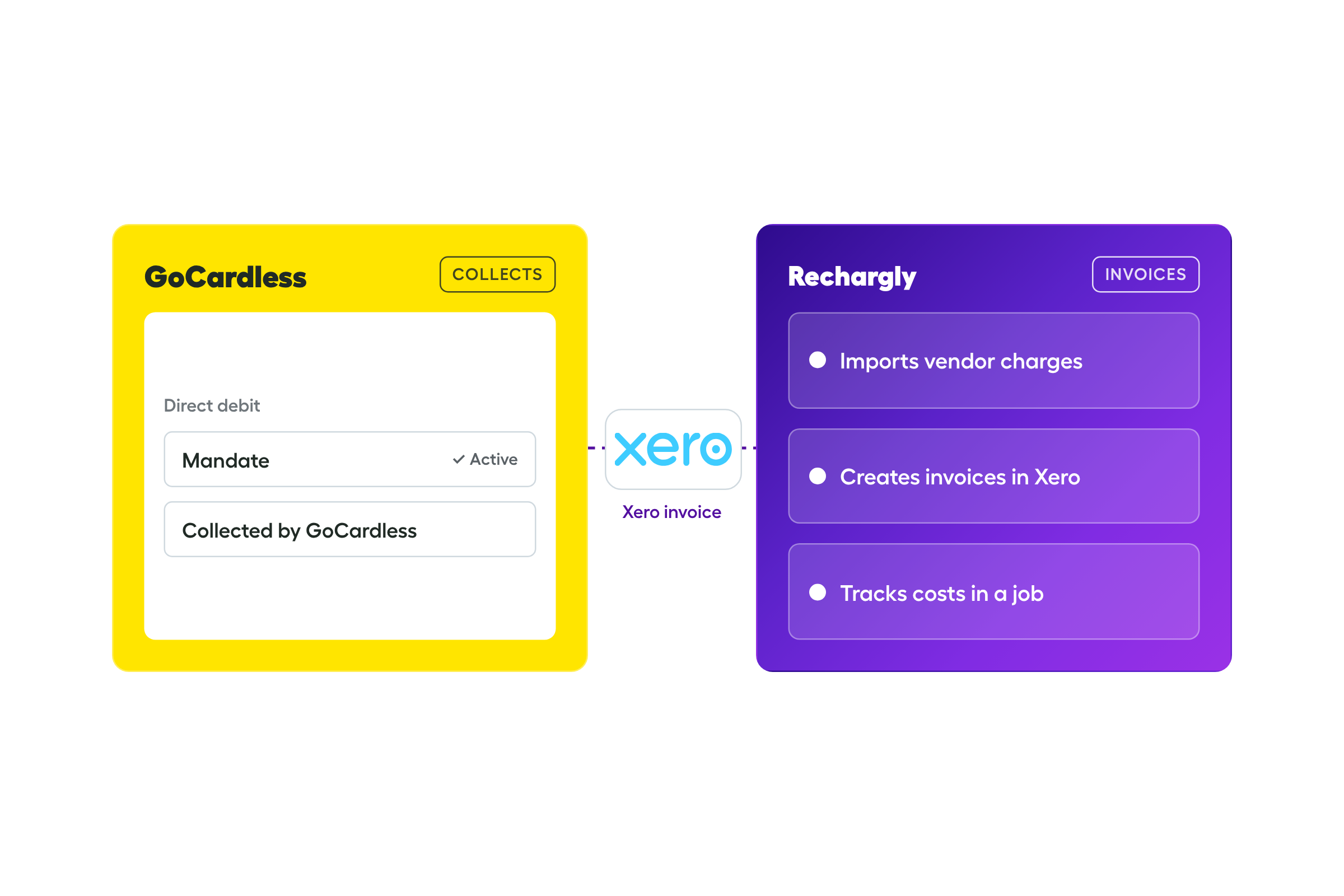
TL;DR. You can recharge software with GoCardless. There are three ways to do it, and the difference is how many jobs stay with your team. GoCardless can collect the money in the first two. Rechargly can create the invoices, or run the collection as well. Each step hands over more of the work. None of them is wrong. It's a trade-off.
The jobs that need doing
Whichever setup you pick, these jobs exist:
- Importing vendor charges and checking the totals
- Creating invoices and keeping them right when plans and prices change
- Getting a Direct Debit mandate from each client
- Making sure client names match across Xero, GoCardless and the vendors
- Chasing failed payments
- Reconciling what lands in the bank
- Tracking costs in a job in your practice manager
The three setups differ in who does them.
1. GoCardless with Xero repeating invoices
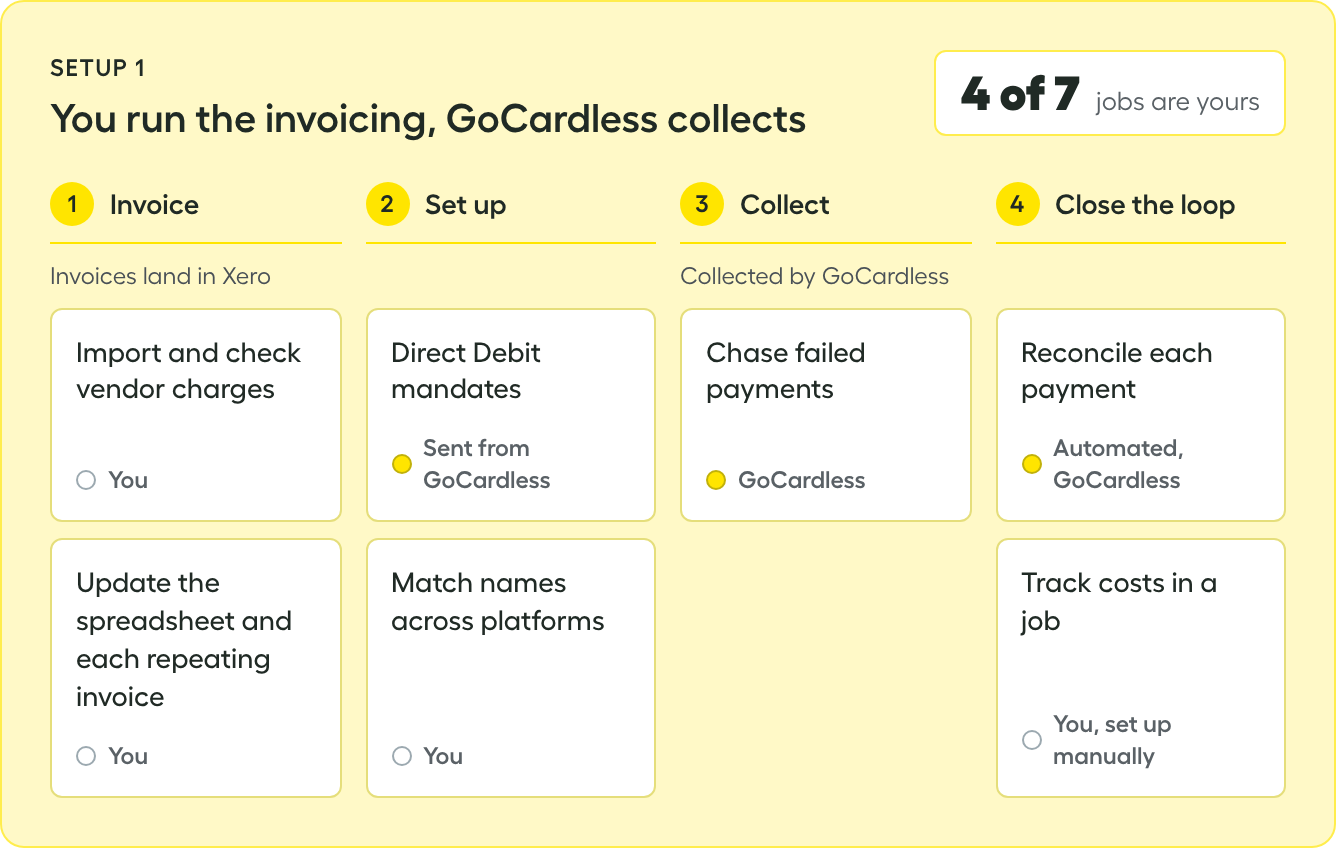
You set up a repeating invoice in Xero for each client and keep a spreadsheet of what each client should pay. GoCardless collects against the invoice.
You do
- Export the vendor charges and total them
- Update the spreadsheet and each repeating invoice when a plan or price changes
- Keep the names matching
- Set costs up in a job manually, or they don't reach it
GoCardless does
- Sends the mandate requests
- Collects against each invoice
- Handles failed payments
- Reconciles each payment automatically
Best for: a short client list with steady plans.
Trade-off: everything rests on your spreadsheet and your team's time.
2. GoCardless for collection, Rechargly for the invoices
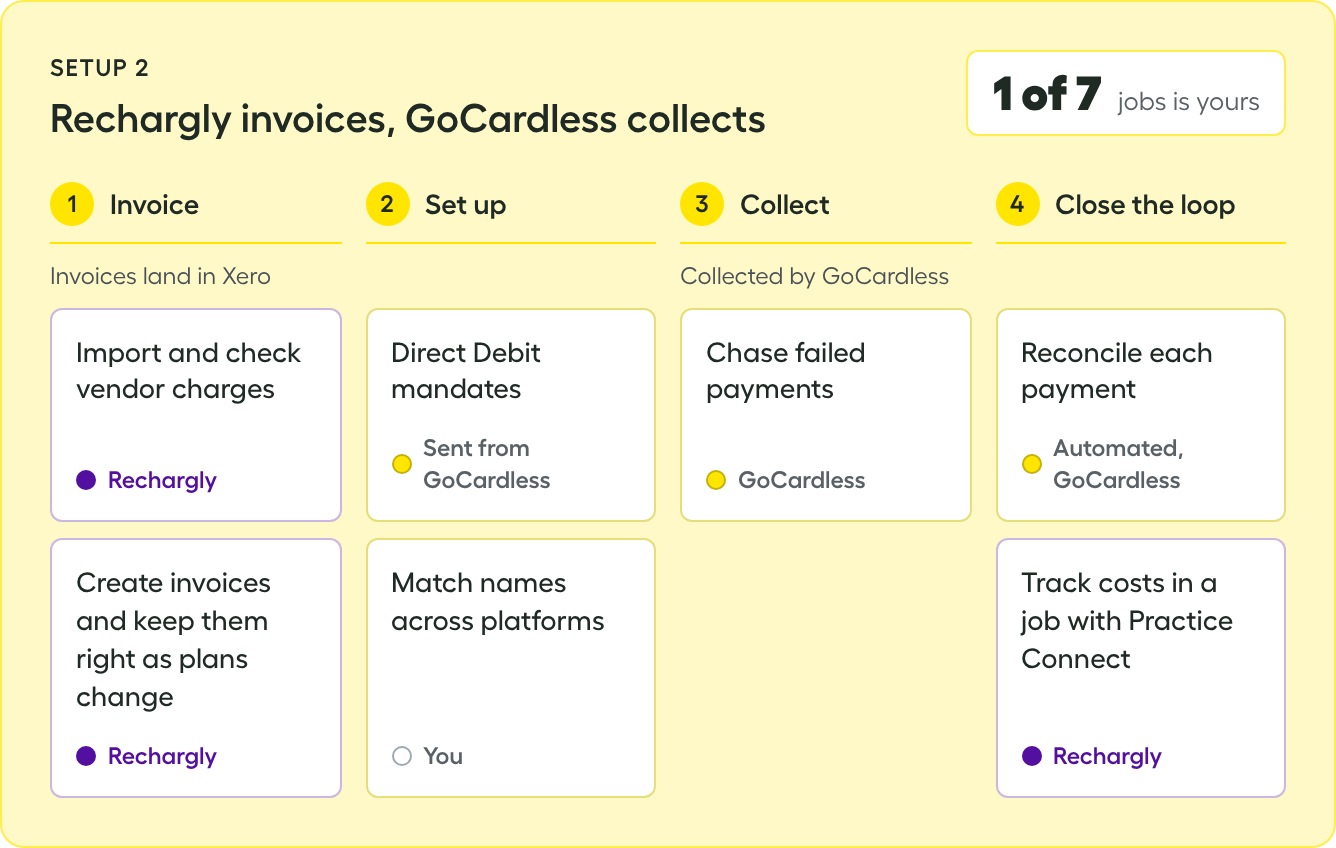
Rechargly imports the vendor charges, works out what each client owes and creates the invoices in Xero. GoCardless collects each invoice on its due date, the way it does today.
You do
- Use a Xero branding theme that includes the direct debit option
- Keep the names matching between Xero and GoCardless
Rechargly does
- Imports and checks the vendor charges
- Creates the invoices and keeps them right when plans and prices change
- Tracks costs in a job with Practice Connect
GoCardless does
- Sends the mandate requests
- Collects each invoice on its due date
- Handles failed payments
- Reconciles each payment automatically
Best for: taking the invoicing off your team without changing how clients pay.
Trade-off: you still match names across the two.
3. Rechargly for everything
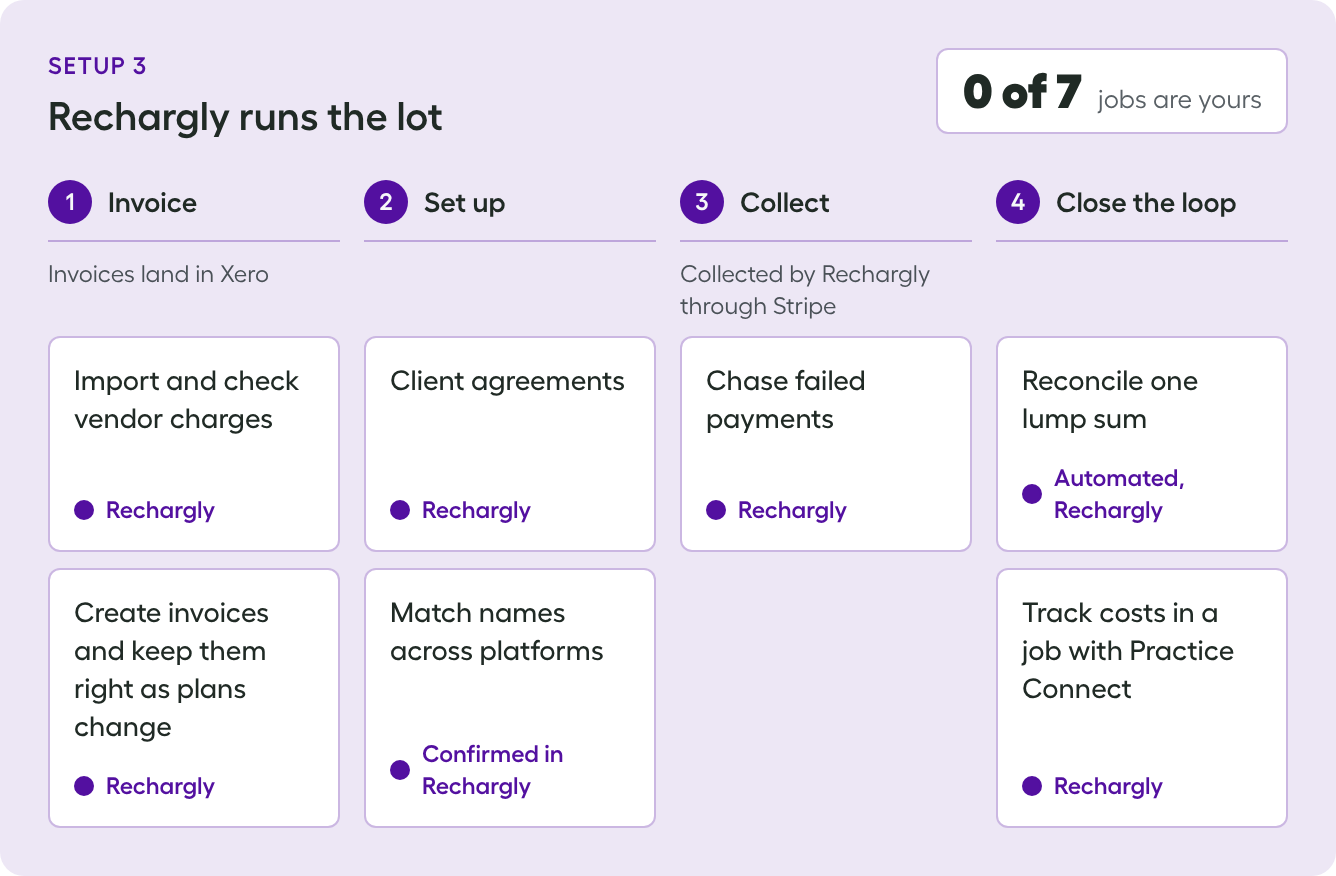
Rechargly creates the invoices and collects the funds through Stripe, by card or bank. Clients accept an agreement, then get the invoice and receipt afterwards.
You do
- Review the month
- Plan a short message to clients about the change
Rechargly does
- Imports and checks the vendor charges
- Creates the invoices and keeps them right when plans and prices change
- Sends the client agreements and confirms names match
- Collects the funds and handles failed payments
- Reconciles one lump sum deposit through a clearinghouse
- Tracks costs in a job with Practice Connect
Best for: doing less work over time, with one place to manage all of it.
Trade-off: collection moves to Rechargly and Stripe, so clients see billing differently. Your GoCardless mandates migrate across and clients don't do anything.
Who does what
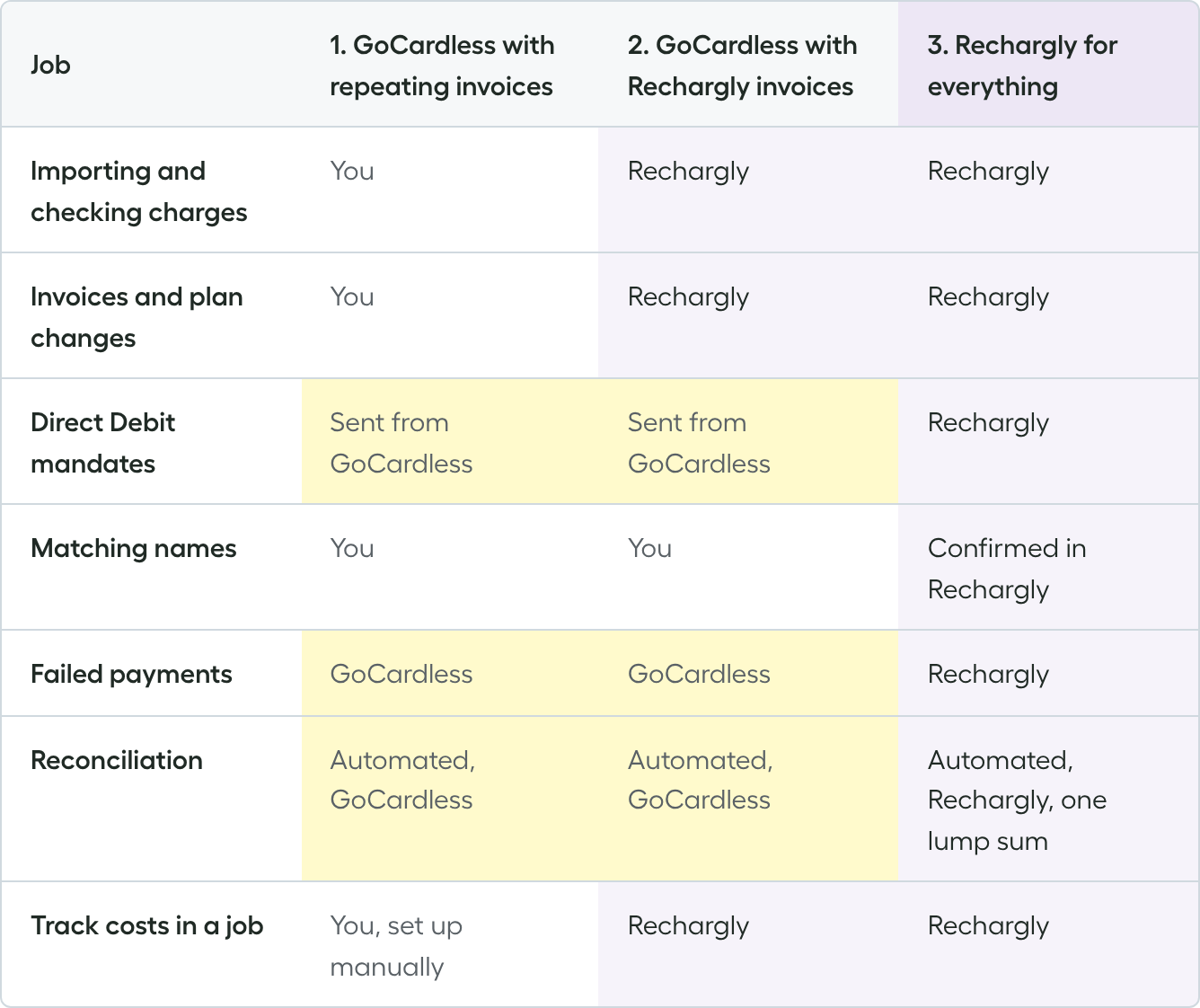
The bottom line
The trade-off is your time against the client experience.
- Option 1 is fine while the client list is short and the spreadsheet holds up.
- Option 2 protects the client experience in the short term. It works if you're just getting started, or you don't want clients migrated or billed from two different places. GoCardless keeps collecting the way it does today, and Rechargly takes the importing and invoicing off your team.
- Option 3 gives you your time back over the long term. You'll do less work with one place to manage all of it.
If you're on option 1 or 2 and want to move to option 3, let us know and we'll do the migration for you.
Frequently asked questions
Can I keep using GoCardless and still use Rechargly?
Yes. Rechargly can create the invoices in Xero while GoCardless keeps collecting the money. A Xero branding theme carries the GoCardless payment option on each invoice, so clients pay the way they do today.
What does Rechargly take off my team if GoCardless keeps collecting?
Importing and checking vendor charges, creating invoices and keeping them right as plans and prices change, and tracking costs in a job with Practice Connect. Matching names stays with you. GoCardless sends the mandate requests and handles failed payments and reconciliation.
Who handles failed payments?
If GoCardless collects, GoCardless flags the failed payment and can retry it automatically with Success+. If Rechargly collects, Rechargly handles them, because we hold the collection.
Do my clients have to do anything if I move collection to Rechargly?
No. Your GoCardless mandates migrate across and clients don't do anything.
Can I move to Rechargly collection later?
Yes. If you bill with repeating invoices or keep GoCardless for collection, let us know and we'll do the migration for you.
How does reconciliation work when Rechargly collects?
Reconciliation is automated either way. With GoCardless it happens payment by payment. With Rechargly you get one lump sum deposit, reconciled through a clearinghouse.
How do I track costs in a job in my practice manager?
With Practice Connect, costs can be pushed to a Rechargly managed job or to an existing job that you've already created.